
April 2, 2026
Step off the plane at Abeid Amani Karume and within minutes the air gets you — warm, salt-touched, heavier than it should be in the best possible way. Zanzibar does that. It announces itself before you’ve even picked up your luggage. But here’s what the glossy travel guides often get wrong: not all of Zanzibar behaves the same. The north coast — Nungwi specifically — operates by its own seasonal rules, distinct from the more commonly written-about east coast resorts. If you’re trying to figure out the best time to visit Zanzibar, that distinction matters enormously. This guide breaks it all down, month by month.
Understanding Zanzibar’s Two Seasons
Zanzibar runs on two main seasonal rhythms. The long rains — locally called Masika — fall between March and May. Heavy, sustained, sometimes theatrical. This is the period most travellers are warned about, and for good reason. The short rains, Vuli, arrive in November, less intense and shorter-lived but still enough to disrupt a beach week.
Sandwiched between these wet periods are two dry seasons. The main one runs from June through October — clear skies, reliable wind, low humidity. The shorter dry window sits between December and February, when the island gets another run of sunshine before the rains eventually return. These are the broad strokes. The nuance, as always, is in the geography.
Why Nungwi Is Different From the Rest of Zanzibar
Most travel advice about Zanzibar is written with Paje or Jambiani in mind — the postcard-famous east coast spots with their shallow lagoons and dramatic low tides. The problem with those tides, if you’ve ever experienced them, is that the ocean can retreat hundreds of metres at low water, leaving guests stranded on sand flats for hours at a stretch.
Nungwi is different. Sitting at Zanzibar’s northern tip, it faces northeast into the Indian Ocean rather than east into the intertidal zone that dominates the island’s opposite side. The north coast is sheltered from the south-east trade winds that batter the east coast resorts from June onward. That means calmer water, a far gentler tidal range, and a beach that stays swimmable for nearly all year.
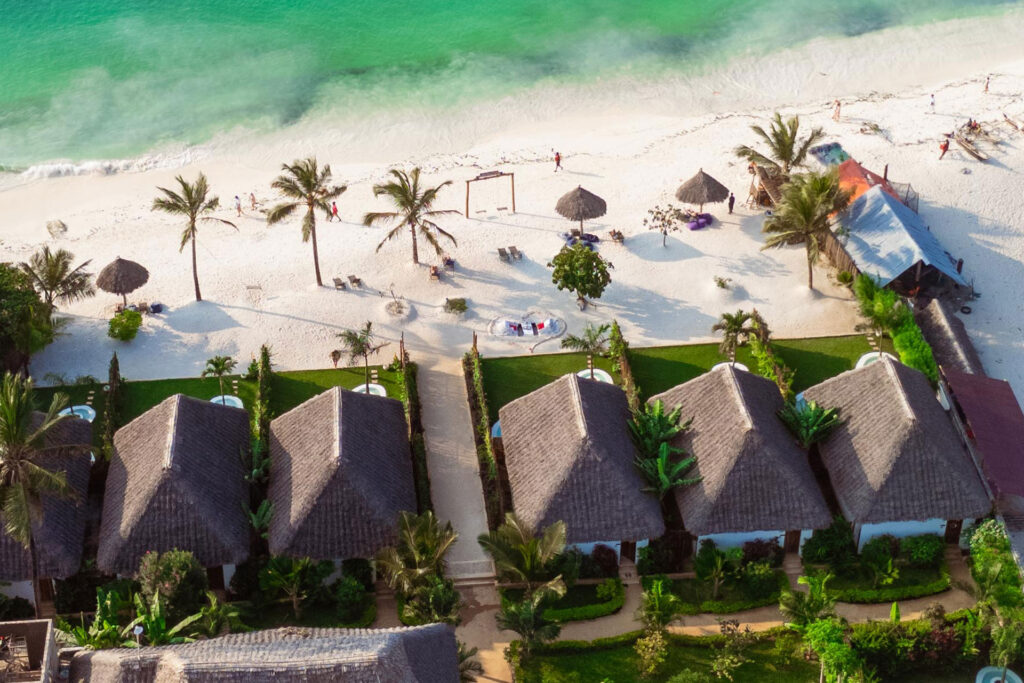
Honestly? It’s a significant advantage. The resorts on the north tip — including Safaya Luxury Villas, which sits right on the sand at Nungwi Beach — don’t have to hedge their bets the way east coast properties do. You can book in October, not worry about disappearing tides, and find yourself in the water by 8am if you want. That’s not something every part of Zanzibar can offer.
Planning Essentials
Month-by-Month Guide to Zanzibar Weather
January and February
These two months get underrated. The short rains have typically cleared by late December, and January settles into a warm, stable dry period. Temperatures in Nungwi sit around 28–30°C, the sea is glassy and clear — visibility for snorkelling can reach 20–25 metres on good days — and the tourist crowds haven’t yet built to peak-season levels.
February is arguably better still. The Indian Ocean is at its calmest before the seasonal shift, whale sharks begin appearing in the waters around Mnemba Island (a short boat ride from Nungwi), and the light has that low-humidity quality that makes every sunset look slightly unreal. Safaya’s beachfront deck at this time of year is… well, it earns the description.
Verdict: Excellent. High on the list for couples who want quality over crowd.
March, April, and May
Here’s where honesty is required. March starts promisingly and then deteriorates. By April, the long rains have usually arrived in force — heavy afternoon downpours, humidity that makes outdoor dining uncomfortable, overcast mornings that don’t always clear. The sea is often choppy. Snorkelling quality drops. Jellyfish numbers rise.
April in Zanzibar… let’s just say it tests your patience. If you can, avoid these three months entirely. Room rates are at their lowest precisely because the weather is at its worst. May is when things begin to turn, but only toward the end of the month.
Snorkelling quality: low. Beach: accessible at Nungwi, but not at its best. Recommendation: wait it out.
June, July, and August
This is peak Zanzibar. June marks the entry into the main dry season — the sky shifts, the southeast trades arrive (gentle at Nungwi rather than punishing), and the island exhales.
July and August are consistently the busiest months. Temperatures cool slightly to 24–27°C during the day, dropping further at night — a ceiling fan is genuinely all you need at Safaya’s villas, no air conditioning required. The sea is cobalt and calm. Visibility underwater is exceptional, often 25–30 metres around Mnemba Island, one of the finest snorkelling and diving sites in the Indian Ocean.
Expect full hotels, higher room rates, and some competition for the best sunset spots on the beach. But the weather is as close to guaranteed as weather gets. For honeymooners in particular, July is hard to argue with.
September and October
September often surprises people. The peak crowds have thinned, pricing softens, and the weather holds. Temperatures nudge back up to 27–29°C, but the humidity stays manageable. The sea remains settled.
October is one of the best months for snorkelling and diving at Mnemba Island — visibility stays high, whale sharks are still present in the area, and the island feels like itself again without July’s crowds. Most people overlook October. That’s a mistake.
By late October, the Vuli short rains may begin to flirt with the calendar, but on the north coast the impact is less dramatic than elsewhere. A few afternoon showers, but rarely anything that ruins a morning on Safaya’s beach.
November and December
November is transitional. The short rains arrive, most reliably in the second half of the month. They’re not as intense or sustained as the long rains, and northern Zanzibar tends to be drier than the south and east. That said, November carries some weather risk and isn’t the most reliable month for a planned beach holiday.
December, particularly from mid-month onward, sees the rains taper off and the mood shift back toward high season. Christmas and New Year in Zanzibar — Nungwi specifically — are buzzing, beautiful, and expensive. Booking far in advance is non-negotiable for those weeks. The festive period at Safaya, with a private pool villa and direct Indian Ocean access, is the sort of thing that becomes a benchmark memory.
Peak Season vs Shoulder Season — What’s the Difference?
Peak season at Zanzibar runs July–August and again December–January. These months offer the most reliable weather, the strongest demand, and higher rates. Book early. There isn’t much flexibility during July and August in particular.
Shoulder season — June, September, and October — is where savvy travellers often find their sweet spot. The weather is nearly indistinguishable from peak season, especially on the north coast. Rates are softer, the beach is quieter, and the diving conditions in September and October are genuinely outstanding. It’s worth checking availability for your preferred shoulder month directly at https://safayaluxuryvillas.com/safaya-villas/ — the window doesn’t stay open long.
The short answer? If you can be flexible, June or October will likely outperform August on what you’re getting for the price.
Best Time to Visit Zanzibar for Specific Activities
Snorkelling and Diving
The best snorkelling conditions at Nungwi run from June through October, with October standing out for visibility and water temperature. Mnemba Island — reachable via boat experience from Nungwi — hosts dolphins, sea turtles, and a coral ecosystem that’s among the healthiest in the western Indian Ocean. Safaya can arrange these excursions directly.
A Zanzibar Honeymoon
For couples, June through August and January through February represent the prime windows. The sea is calm, the skies are reliable, and Safaya’s adults-only setup — private pool, hammock, wooden deck — does the rest. A beach dinner under clear skies at this latitude is something else entirely.
Whale Shark Season
Whale sharks frequent the waters around Mnemba Island most reliably between October and February, with October and November often the peak months for sightings. This is one of the genuinely remarkable things about the north coast — you can be watching whale sharks in the morning and back at your villa pool by noon.
Sunset Cruises from Nungwi
The north coast faces west across open water, which means Nungwi has proper sunsets — not blocked by land. Sunset cruises run year-round from Nungwi, but the light between June and October is extraordinary. The dry air gives the horizon a clarity that turns the last twenty minutes of daylight into something worth staying on deck for.
Our Honest Advice — When Should YOU Book?
Here’s how it breaks down by visitor type.
Couples and honeymooners: June through October is the safest, most beautiful window — and for something more intimate, January and February run a close second. If budget matters, go in June, September, or October — near-peak conditions at noticeably better rates. Snorkellers and divers: October is your month — whale sharks, visibility, and quieter waters. Families or travellers on a tight schedule: July and August remove all weather risk, but book well in advance.
Avoid April and May if you can. And if November is your only option — particularly on the north coast — it can work, but go in with eyes open.
Safaya Luxury Villas · Nungwi, Zanzibar
FAQs About the Best Time to Visit Zanzibar
Q: What is the best month to visit Zanzibar? A: July and August offer the most consistent weather across the island, with clear skies, low humidity, and calm seas. That said, June and October are strong contenders on the north coast — particularly around Nungwi — where conditions are nearly as good, crowds are thinner, and rates tend to be lower.
Q: Is Zanzibar good in April? A: Honestly, April is the hardest month to recommend. It falls squarely in the long rains (Masika) season, which brings heavy and sustained rainfall, high humidity, and rougher seas. Prices are at their lowest for this reason. If April is your only available window, set your expectations accordingly and focus on indoor experiences — Stone Town, the spice farms, the culture — rather than beach days.
Q: What is the weather like in Nungwi in July? A: July at Nungwi is close to ideal. Daytime temperatures hover around 25–27°C — warm but not oppressive — with very low humidity and reliably clear skies. The southeast trade winds bring a gentle breeze to the north coast without the intensity that affects east coast resorts. The sea is calm, blue, and clear, with excellent visibility for snorkelling.
Q: When is Zanzibar’s rainy season? A: Zanzibar has two rainy periods. The long rains (Masika) run from March through May, with April being the wettest month. The short rains (Vuli) arrive in November, typically less intense and shorter-lived. The north coast — Nungwi — tends to receive less rainfall than the south and east of the island during the short rains, making it a more reliable year-round option.
Q: Can you swim at Nungwi Beach all year round? A: In most years, yes — and this is one of Nungwi’s key advantages over east coast beaches. The tidal range at Nungwi is far gentler than at places like Paje or Jambiani, meaning the beach and water remain accessible at virtually all tide states. The only months where swimming is less enjoyable are April and May, not because of the tides but because the sea is rougher and the weather generally unpleasant.
Whatever month you’re considering, the north coast gives you options that other parts of Zanzibar simply don’t. A private pool villa facing the Indian Ocean — the kind of morning where the only sound is the tide and a ceiling fan moving the warm air overhead — is waiting. Check villa availability at safayaluxuryvillas.com/villas/ and find your window. The right time to go is usually sooner than you think.
Recent Posts
- Beach Movie Night in Zanzibar: The Simplest, Most Romantic Evening You’ll Have All Trip
- Sunset Beach Yoga in Zanzibar: Why Your Villa Stay Should Include This Ritual
- Looking for a Zanzibar All-Inclusive Resort? Here’s What You Actually Get at Safaya Luxury Villas
- Kendwa Beach Resort Zanzibar: The Complete Guide to Where to Stay, What to Do, and When to Go
- 25 Best Activities to Do in Zanzibar: A Complete 2026 Guide
Recent Comments
No comments to show.
Categories


Categories
Tags
- boat tour zanzibar
- boat trips zanzibar
- hotel in zanzibar
- kendwa beach resort zanzibar
- Kendwa Beach Zanzibar
- Luxury Accommodation Zanzibar
- Marriage Proposal in Zanzibar
- Nungwi beach villa rental
- private boat trip
- Romantic Proposal Ideas
- Stone Town Zanzibar
- Sunset Beach Yoga
- What to Eat in Zanzibar
- Where to Stay in Zanzibar
- zanzibar activities to do
- Zanzibar Packing List
- ZanzibarPackingList
- Zanzibar Romantic Getaways