
June 15, 2026
We are based in Nungwi, on the northern tip of Zanzibar. Our team — from the kitchen staff who grew up cooking with their grandmothers in Stone Town, to the villa hosts who take guests on spice farm tours twice a week — eat this food every day. We argue about which urojo stall in Stone Town is better (the answer depends on who you ask and what time of year it is). We know which fish market our restaurant sources from and why the octopus from the north coast is different from what you find down south.
That is the only credential worth having when it comes to writing about food: you actually eat it, repeatedly, with people who know it well.
So here is what to eat in Zanzibar — honestly, with context, and without the kind of breathless overstatement that makes every bowl of rice sound like a spiritual awakening.
First: Understand What Zanzibar Food Actually Is
Zanzibar earned the nickname “the Spice Island” for a reason. For centuries, it was one of the most important trading ports in the Indian Ocean. Arab merchants from Oman, Indian traders, Persian settlers, and East African coastal communities all passed through — and every group left something behind in the kitchen.
The result is a cuisine that does not fit neatly into a single category. It is Swahili in its bones, Arab in its spicing, Indian in its rice technique, and deeply coastal in its protein. Cloves, cardamom, cinnamon, and black pepper show up in dishes that would otherwise look like they came from four different continents.
Understanding this history makes the food more interesting. When you eat pilau in Zanzibar, you are eating a dish that Omani traders brought with them in the 1600s, adapted over generations by Swahili cooks who added local spices and adjusted it to the ingredients available on the island. That context is not trivia. It changes how the food tastes when you know where it came from.
The Dishes You Should Actually Try
1. Pilau — Start Here
If there is one dish that captures what Zanzibar cooking is, it is pilau. This is spiced rice cooked directly in a meat broth — usually beef or chicken — so that every grain absorbs the flavour from the inside out. The spice mix is heavy on cloves, cardamom, cinnamon, black pepper, and cumin, and it should make the kitchen smell extraordinary.
A good pilau is deep golden in colour, never white. The rice should be slightly sticky but not clumped, and each grain should carry the broth all the way through. It is served with kachumbari — a simple fresh salad of tomato, onion, and sometimes green chilli — which cuts through the richness and gives the dish its balance.
Every Friday, across Zanzibar, families cook pilau for the midday meal. It is embedded in the rhythm of the week. When you eat it in a local restaurant, you are eating something that has been cooked the same way, in roughly the same combination of spices, for generations. That matters.
Where to try it: Lukmaan Restaurant in Stone Town. It is a cafeteria-style place, not fancy, and that is exactly the point. The pilau here is made the way home cooks make it. You will pay around 5,000 to 8,000 Tanzanian shillings — less than three US dollars.
2. Urojo — The Dish Most Tourists Overlook
Urojo goes by a few names. Some people call it Zanzibar Mix. Older menus sometimes list it as “Zanzibari soup.” None of these names do it justice.
It is a thick, sour, deeply aromatic soup built on a turmeric-yellow base made from flour, tamarind, and coconut milk. Into this go boiled potatoes, cassava, crispy bhajias (lentil fritters), sometimes pieces of meat or hard-boiled egg, and a spoonful of chutney on top. It is tart, warming, filling, and unlike anything you will have eaten before.
The sourness comes from tamarind, which is grown on the island. The creaminess comes from the coconut milk. The bhajias on top stay crispy for about four minutes before the soup softens them, so you need to eat it quickly. Real Zanzibaris eat urojo fast, standing at a stall, which is probably how you should eat it too.
Most food guides either miss urojo entirely or mention it in one line below the more photogenic dishes. That is a mistake. This is one of the most genuinely local things you can eat on the island, and it costs almost nothing.
Where to try it: The night stalls at Forodhani Gardens in Stone Town. Go to a stall where you can see locals queuing. The soup should be served hot. If they are ladling it out of something that has been sitting on a cold surface for a while, move to the next stall.
3. Zanzibar Pizza — Nothing Like What the Name Suggests
The name is misleading and was probably always intended to attract tourists. Zanzibar pizza has nothing to do with Italian pizza. It is a thin wheat dough stuffed with fillings — minced beef, onion, egg, and cheese are the standard savoury version — folded into a square, and fried on a flat griddle until golden and crispy.
Sweet versions exist too: banana and Nutella, mango and coconut, sometimes just egg and sugar. They are the kind of thing you eat as a street snack at 9pm when you have already had dinner and are wandering through Stone Town wondering what else there is.
The technique is worth watching. Vendors stretch the dough incredibly thin — almost translucent — before folding in the filling. The whole process takes maybe four minutes. The result is crispy on the outside, soft and slightly runny on the inside from the egg, and satisfying in a way that is hard to explain until you eat one.
What to pay: 5,000 to 8,000 TZS for a savoury version ($2 to $3). If someone charges you significantly more than that without a very good reason, walk to the next stall.
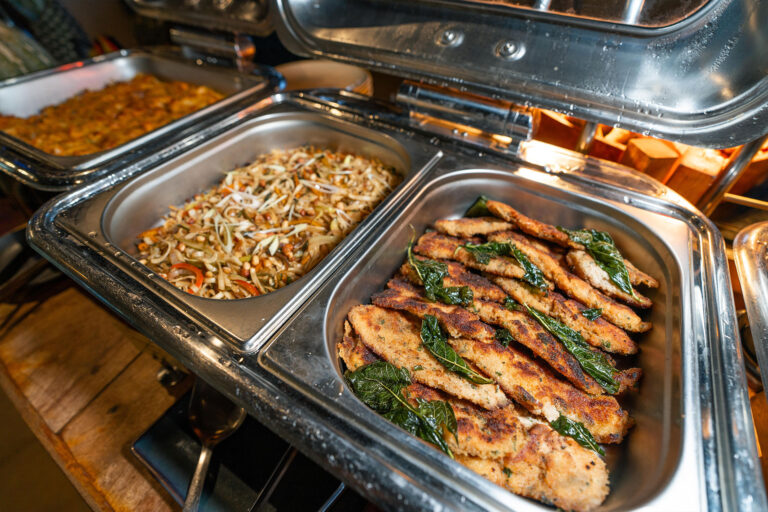
4. Grilled Seafood — The North Coast Advantage
This is the part where staying in Nungwi, rather than further south or in Stone Town, genuinely changes what you eat.
The north coast of Zanzibar — where Safaya is located — has some of the best seafood on the island. The reef system here is intact, the water is clear, and the fishing boats come in daily. The octopus from this stretch of coast tends to be smaller and more tender than what you find down south; the prawns are large and sweet and, when grilled over charcoal with a small amount of garlic and lemon, require very little else.
At the beach restaurants and at the villa itself, the best approach is simple: ask what came in that morning and eat that. The worst thing you can do in Zanzibar is order something that requires the kitchen to use frozen protein, when everything fresh is sitting twenty metres away.
What to order: Grilled whole fish (usually red snapper or kingfish), octopus prepared in coconut sauce (samaki wa kupaka for fish, a similar coconut preparation for octopus), and prawns grilled simply with lemon and chilli. Lobster is available but seasonal — if it is on the menu in a month when it should not be in season, ask about it.
Samaki wa kupaka specifically: This is a dish worth seeking out. A whole fish — usually freshly caught — is grilled and then finished with a sauce made from coconut milk, lemon, garlic, and chilli. The sauce is rich but not heavy, and the fish should be tender enough to pull away from the bone without effort. It is one of the defining Swahili coast dishes.
5. Biryani — The Friday Version
Like pilau, biryani came to Zanzibar through the Arab and Indian trading routes. The Zanzibari version is distinct from both Indian biryani and the plainer pilau: it is layered, slow-cooked, and usually richer in spice and fat than the everyday pilau.
It is primarily a special-occasion dish. Many families make it on Fridays, for celebrations, for guests. When it appears at restaurants, the best versions are the ones where you can taste that someone spent the morning cooking it, not something that has been sitting in a warming tray since noon.
If you are eating biryani in a tourist restaurant and it arrives in under ten minutes, that is a warning sign. Good biryani takes time.
6. Chipsi Mayai — The Practical One
Chipsi mayai is chips omelette. That is exactly what it is: French fries cooked into an egg omelette on a flat pan. It is not sophisticated. It is eaten everywhere, by everyone, at all hours. Street stalls make it, restaurants serve it as a side dish, and it costs next to nothing.
It is also genuinely good, particularly when made with fresh eggs and served with pili pili (the local hot sauce, which is simple and sharp and not overly sweet like most commercial hot sauces).
We mention it because food guides often ignore it in favour of more interesting-sounding dishes, but chipsi mayai is the thing you will probably end up eating more than once simply because it is always there and always satisfying. Do not pretend otherwise.
7. Mandazi — The Breakfast You Should Not Skip
Mandazi are East African fried doughnuts. They are slightly denser than a Western doughnut, mildly sweet, and sometimes flavoured with cardamom or coconut. In Zanzibar, they are the standard breakfast item: eaten with chai (spiced tea), usually in the morning, at any number of small cafés or from vendors carrying them in covered trays.
The best mandazi are eaten fresh, within an hour of being made. They are good. The ones that have been sitting since early morning are still fine, just not as good.
In Nungwi, you can buy mandazi from the women who sell them in the village in the early morning. They cost a few hundred shillings each. If you are doing a spice farm tour in the morning and leave early, ask your driver to stop.
8. Mishkaki — The Snack You Eat While Walking
Mishkaki are marinated meat skewers grilled over charcoal. Beef is most common; chicken and goat are also available. The marinade is simple — ginger, garlic, a little cumin — and the key to a good mishkaki is that the meat has actually marinated long enough and the charcoal is properly hot so the outside caramelises without the inside drying out.
They are street food in the truest sense: cheap, fast, eaten standing up, available everywhere from Forodhani Gardens to roadside stalls between villages. Order two or three and eat them with a cold Kilimanjaro beer if you want the authentic version of this experience.
9. Fresh Tropical Fruit — Not a Footnote
Most food guides mention fruit at the end as an afterthought. On an island where mangoes, jackfruit, pineapple, passionfruit, and soursop grow within ten minutes of where you are sitting, fruit is not an afterthought.
Zanzibar mangoes — when in season, roughly November through February — are the best we have eaten anywhere. They are small, very sweet, and eaten at room temperature so the flavour is fully open. A chilled mango tastes of nothing; a room-temperature Zanzibar mango in season tastes of everything you hoped mango would taste like when you were a child.
The spice farm tours that most guests do when visiting from Nungwi will show you jackfruit growing on the tree, and you will likely eat it fresh there. Eat it. It is better fresh than anything sold in a supermarket in another country.
10. Spiced Tea (Chai) — The Social Drink
This is not food, technically, but no honest guide to eating in Zanzibar would leave it out. Chai in Zanzibar is black tea brewed with milk, ginger, cardamom, and sometimes cloves. It is sweet, warming, and drunk throughout the day at any small café or from roadside vendors.
In the morning, it comes with mandazi. In the afternoon, it comes with conversation. It is the social lubricant of daily life on the island in a way that coffee is not, and understanding that helps you understand how the island moves.
Forodhani Gardens: What You Need to Know Before You Go
Forodhani Gardens, on the waterfront in Stone Town, is the most famous street food location in Zanzibar. Every evening, as the sun drops into the sea, vendors set up stalls and the park fills with people: families, tourists, vendors, children running between the palm trees.
It is worth visiting. It is also worth going in with clear expectations.
What it actually is: An open-air night market where you can eat urojo, Zanzibar pizza, grilled seafood, mishkaki, fresh fruit, and drink sugar cane juice pressed in front of you. The atmosphere is genuinely vibrant and not manufactured. Local families come here on weekends; it is not an artificial tourist experience.
What to watch for: Seafood prices are sometimes negotiated before eating and sometimes not. Confirm the price before you commit, especially for lobster or large portions of grilled fish. The market has a long history of some vendors charging tourists more than locals; this is not universal, but it exists. Going with a local or a guide who knows the stalls solves this quickly.
What to eat here specifically: Urojo (as discussed above), Zanzibar pizza, sugarcane juice with ginger and lime, and grilled octopus if you are hungry. Skip the “fresh” whole fish that has been sitting on display for several hours; it will not be the same as what you get at a proper restaurant or at the villa.
When to go: Between 7pm and 9pm is the peak time, which is also the most atmospheric. If you want to eat without the crowd, arrive around 6:30pm before the main wave of visitors.
Eating at Your Villa in Nungwi vs. Going Out
If you are staying at Safaya, you already have access to a kitchen and a restaurant that sources locally. This changes the calculation slightly.
The case for eating at the villa: the seafood is sourced from local fishermen, the spice use is informed by genuine Swahili cooking traditions, and you eat with a view of the Indian Ocean. A grilled fish breakfast or a prawn curry lunch beside a private pool is, in our genuinely unbiased opinion, one of the better ways to eat in Zanzibar.
The case for going out: Stone Town is forty-five minutes away, and the food at Forodhani, Lukmaan, and a handful of other local restaurants is different from what you get at any villa kitchen — more rough-edged, more directly tied to how locals actually eat every day. Both versions of eating in Zanzibar are worth having. They are not the same experience.
A reasonable approach for a week-long stay: eat at the villa for most meals, do one evening at Forodhani Gardens, visit Lukmaan for a pilau lunch during a Stone Town day trip, and stop at a spice farm where you will eat fresh fruit and understand where the flavours in every meal you have eaten actually come from.
A Few Practical Notes
Meat: Zanzibar is a predominantly Muslim island. Pork is not served at local restaurants and is essentially unavailable across the island. Beef, chicken, goat, and seafood are the standard proteins.
Vegetarian eating: Possible but requires some navigation. Pilau can be made vegetarian (though the broth is usually meat-based unless you specify). Chapati with beans or vegetable curry is genuinely good. The fresh fruit and market options are substantial. You will not go hungry, but it takes slightly more effort than in a city with a dedicated vegetarian food scene.
Water: Do not drink tap water. Bottled water is available everywhere and cheap. Avoid ice at street stalls unless you know the source.
Cash: Most street food and smaller restaurants are cash-only. Bring Tanzanian shillings for markets and stalls. Mid-range and upscale restaurants increasingly accept cards, but do not rely on it.
Best time for seafood: Zanzibar’s fishing is year-round, but the calmest seas and freshest catches tend to coincide with the dry seasons — June to October and December to February. Lobster is more reliably available in the cooler months.
The Honest Summary
Zanzibar food is good. Not “surprisingly good” — just genuinely good, in the way that food is good when it is cooked with ingredients that grew or were caught nearby and spiced by people who have been doing it for a long time.
The dishes are not technically complex. What makes them work is the quality of the raw material — the seafood from these specific waters, the cloves that grow on farms twenty minutes from Stone Town, the mangoes that ripen in the heat of the Zanzibar sun — and the patience of the cooking. Pilau that has not simmered long enough tastes flat. Urojo made without enough tamarind tastes like nothing. Octopus that has not been tenderised properly is like rubber.
Eat the right version of these dishes, in the right context, and you will understand why people come back to Zanzibar not just for the beaches.
Safaya Luxury Villas is located in Nungwi, on the northern coast of Zanzibar. Our restaurant serves Swahili-inspired meals using locally sourced seafood and island produce. Guests can arrange spice farm tours, Stone Town food excursions, and private beach dinners as part of their stay. For enquiries or bookings, visit safayaluxuryvillas.com or call +255 777 135 101.
Recent Posts
- Beach Movie Night in Zanzibar: The Simplest, Most Romantic Evening You’ll Have All Trip
- Sunset Beach Yoga in Zanzibar: Why Your Villa Stay Should Include This Ritual
- Looking for a Zanzibar All-Inclusive Resort? Here’s What You Actually Get at Safaya Luxury Villas
- Kendwa Beach Resort Zanzibar: The Complete Guide to Where to Stay, What to Do, and When to Go
- 25 Best Activities to Do in Zanzibar: A Complete 2026 Guide
Recent Comments
No comments to show.
Categories


Categories
Tags
- boat tour zanzibar
- boat trips zanzibar
- hotel in zanzibar
- kendwa beach resort zanzibar
- Kendwa Beach Zanzibar
- Luxury Accommodation Zanzibar
- Marriage Proposal in Zanzibar
- Nungwi beach villa rental
- private boat trip
- Romantic Proposal Ideas
- Stone Town Zanzibar
- Sunset Beach Yoga
- What to Eat in Zanzibar
- Where to Stay in Zanzibar
- zanzibar activities to do
- Zanzibar Packing List
- ZanzibarPackingList
- Zanzibar Romantic Getaways