I still remember the first morning I woke up in Nungwi, pulled back the curtains, and saw nothing but turquoise water stretching to the horizon. That was three seasons ago, and I’ve been back to Zanzibar enough times since — staying at Safaya Luxury Villas each time — that I’ve lost count of how many boat captains, dive instructors, and spice farmers I’ve chatted with along the way. This guide isn’t a copy-paste of a tourism brochure. It’s built from actual mornings on the sand, actual afternoons in the water, and actual conversations with the people who run these experiences every day.
If you’re planning a trip and typing “Zanzibar activities to do” into a search bar at 11pm trying to build an itinerary, this is for you.
Why Zanzibar Deserves More Than a Beach Day
Zanzibar gets marketed as a beach destination, and it is one of the best in the world for that. But the island is also a working spice economy, a Swahili trading post with 200 years of layered history, and one of the few places on the planet where you can genuinely walk on the ocean floor without diving certification. Most first-time visitors underestimate how much there is to do beyond sunbathing — I certainly did on my first trip.
Below, I’ve grouped activities by type so you can build a realistic schedule, whether you have three days or ten.
Ocean & Water Experiences
1. SeaWalking (No Swimming Skills Required)
This was the activity I was most skeptical about and ended up loving the most. You wear a weighted helmet, walk down a ladder into the shallows, and literally stroll along the seabed among fish and coral while breathing normally through a constant air supply pumped from the surface. No certification, no swimming ability needed — even guests who are nervous around water have done it with us. It typically runs around $100 per couple and takes about 30-45 minutes in the water.
2. Snorkeling and Boat Trips to Mnemba Island
Mnemba Atoll, off the northeast tip of Zanzibar, is where the water shifts from turquoise to an almost unreal aquamarine. The reef around it is protected, so the coral and fish life are noticeably healthier than closer to shore. A private boat trip out there, with snorkeling gear and usually a stop for fresh fruit or a light lunch on board, is one of the few “must-do” activities I’d genuinely put at the top of any list. We arrange these directly for guests — you can see how we structure a full day on our private boat trips page.
3. Sunset Cruises
Zanzibar sunsets have a particular orange-to-pink gradient that’s hard to describe until you’ve watched one from a dhow boat with the engine cut. A private sunset cruise, ideally timed for around 5:30-6:30pm depending on the season, is one of the most photographed moments couples bring back from the island — and one of the easiest to underestimate in terms of how special it feels in person.
4. Diving
The Zanzibar Channel and the reefs around Mnemba and Tumbatu offer genuinely good diving — visibility often exceeds 20 metres in the dry season (June to October and December to February tend to be clearest). If you’re PADI certified, ask about wreck dives near Stone Town in addition to the reef sites; most visitors only hear about the reefs and miss the wrecks entirely.
Cultural and Land-Based Activities
5. Stone Town Walking Tour
Stone Town is a UNESCO World Heritage Site, and it rewards slow walking far more than a rushed group tour. Narrow alleys open onto carved wooden doors, old merchant houses, and the former slave market site, which is now home to a memorial and the Anglican cathedral built on the location. Go with a local guide rather than alone the first time — the alleys genuinely do not follow logical patterns, and a guide will explain context you’d otherwise miss entirely, like why certain door carvings signal Indian versus Omani trading families.
6. Spice Farm Tour
Zanzibar earned the nickname “Spice Island” for a reason. A spice farm tour usually involves a guide walking you through cloves, vanilla, cinnamon bark, cardamom, and nutmeg trees, letting you smell and taste things straight off the plant. It’s touristy in structure but genuinely informative if you go in curious — I learned more about how vanilla is hand-pollinated on a $15 farm tour than I expected to learn on the entire trip.
7. Jozani Forest and the Red Colobus Monkeys
Jozani-Chwaka Bay National Park, in the south-central part of the island, is the only place in the world where you’ll find the red colobus monkey, a species endemic to Zanzibar. The forest walk is short (about 45 minutes to an hour) but worth combining with the nearby mangrove boardwalk.
8. Prison Island (Changuu)
A short boat ride from Stone Town, Prison Island is home to giant Aldabra tortoises, some reportedly over 100 years old, alongside good snorkeling just offshore. It’s an easy half-day add-on if you’re already exploring Stone Town.
Slower, More Personal Experiences
Not every good Zanzibar activity involves a boat or a guide. Some of the most memorable parts of a trip happen back at the villa.
9. A Floating Breakfast
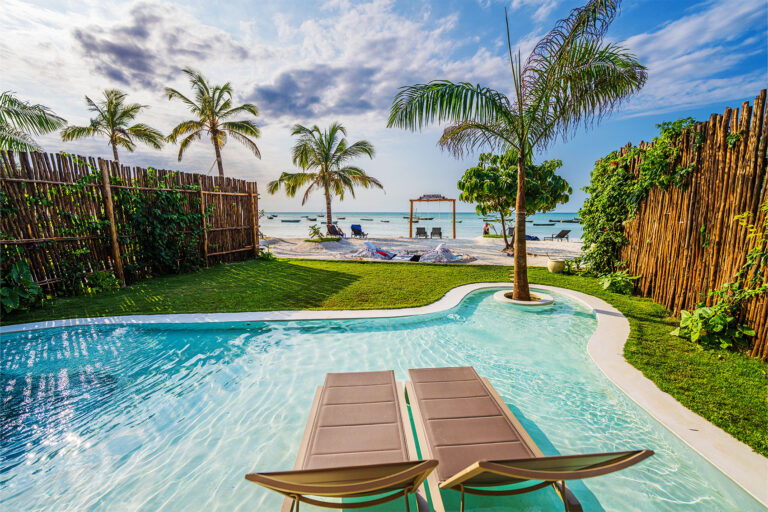
This one sounds gimmicky until you’ve actually had one. Breakfast is arranged on a floating tray in your private pool — fresh fruit, pastries, coffee — and you eat it half-submerged with the ocean visible over the pool’s edge. We include this as part of our experiences and add-ons, and it’s consistently one of the most requested by returning guests.
10. A Private Beach Dinner
Candlelit tables set directly on the sand, with the tide within earshot, are a Zanzibar cliché for a reason — they work. Ours is arranged for around $200 per couple, timed to catch the last of the light.
11. Professional Photography or a Proposal Setup
If you’re marking a honeymoon, anniversary, or a proposal, it’s worth booking a photographer for at least one evening. We’ve seen guests initially hesitant about “posed photos” end up treasuring them more than any phone photo from the trip, simply because of how the golden hour light comes off the water here.
Planning Tips From Repeated Stays
A few practical notes that don’t always make it into generic guides:
- Book water activities early in your stay, not the last day. Weather and tide conditions can shift plans, and having a buffer day means a rough sea forecast doesn’t cancel your one shot at Mnemba.
- Nungwi and Kendwa (north Zanzibar) generally have calmer, clearer water than the east coast, which is better suited to activities like SeaWalking and snorkeling.
- Dress modestly in Stone Town and rural areas — shoulders and knees covered — even though beach resorts are more relaxed.
- Carry small denominations of Tanzanian shillings for spice farm tips and market stalls, even if your resort runs on card payments.
Building Your Itinerary Around Where You Stay
Most of what makes these activities feel effortless rather than exhausting comes down to logistics — airport transfers, boat pickups, and not having to coordinate every detail yourself. At Safaya Luxury Villas in Nungwi, we handle the arrangements for guests staying with us, whether that’s a spice tour, a private boat charter, or dinner reservations. You can see our current villas and available packages if you’re still working out where to base yourself, and if you’d rather eat locally without leaving the property, our restaurant runs on fresh, daily-sourced Zanzibari and international dishes.
Whatever pace you’re after — action-packed diving and boat days, or slow mornings with nothing on the calendar but a floating breakfast — Zanzibar genuinely has room for both, often in the same week.
Have questions about planning your own trip? Get in touch with us directly — we’re happy to share more from our own experience arranging these activities for guests.